When shopping on e-commerce platforms like Shopee, Lazada, Amazon or TikTok Shop, consumers frequently encounter the exact same product offered by several different seller types. Failing to clearly distinguish between a brand’s official store (Official Store), an officially authorized partner (Authorized Reseller), and an independent third-party merchant (Marketplace Seller) can lead to significant risks. This article provides an in-depth operational analysis of each business model and outlines a 5-step verification process to accurately identify seller types before placing an order.
Legal Status and Core Nature of the Three Seller Models
To choose the right place to purchase, you first need to understand the legal relationship and supply chain behind each seller category.
1. Official Store (Flagship Store)
An Official Store is directly owned, operated, or exclusively managed on an e-commerce platform by the brand manufacturer itself.
- Product Origin: 100% shipped directly from the brand’s factory or central distribution hub.
- Warranty Benefits: Receives the highest level of official warranty service, quick replacements, and direct customer support from the brand’s primary service team.
- Examples: Samsung Official Store, Apple Flagship Store, Lock&Lock Official Store.
2. Authorized Reseller
An Authorized Reseller is an independent retail enterprise that has entered into an official distribution agreement with the brand. These retailers satisfy strict requirements regarding service quality, infrastructure, and sales commitments established by the brand.
- Product Origin: Imported through official distribution channels with complete commercial invoices, tax documentation, and certificates of origin (CO/CQ).
- Warranty Benefits: Customers purchasing from authorized resellers receive full manufacturer warranty coverage serviced at official brand service centers, identical to buying from an Official Store.
3. Marketplace Seller (Third-Party / Independent Seller)
A Marketplace Seller is an individual or independent merchant who registers a seller account on an e-commerce platform without holding a distribution agreement or direct verification from the brand.
- Product Origin: Highly variable and difficult to verify. Products may include grey-market imports, unverified imports, liquidations, refurbished items, or counterfeit goods.
- Warranty Benefits: Depends entirely on the individual seller’s reputation. Most official brand repair centers will decline warranty service for items purchased from these sources if valid commercial tax invoices are unavailable.
5-Step Process to Accurately Identify Seller Types
To avoid confusion when navigating shopping apps, apply this 5-step verification procedure:
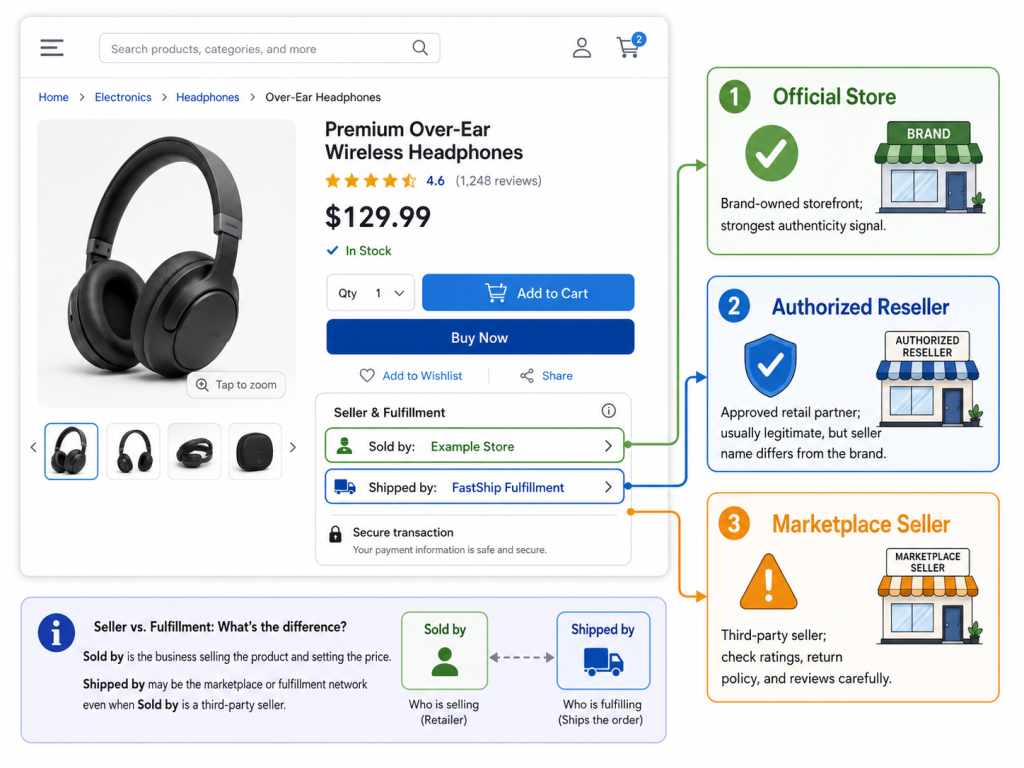
Step 1: Inspect “Sold by” and “Shipped by” Information
Located directly beneath the “Add to Cart” button or near the product price, e-commerce platforms explicitly disclose the party responsible for fulfilling the order:
- Official Store: Clearly lists “Sold by [Brand Name] Official Store” or “Sold by [Brand Name]”.
- Authorized Reseller: Displays a recognized retail company name alongside official retailer verification tags.
- Marketplace Seller: Displays an individual account name or generic shop handle without official verification badges.
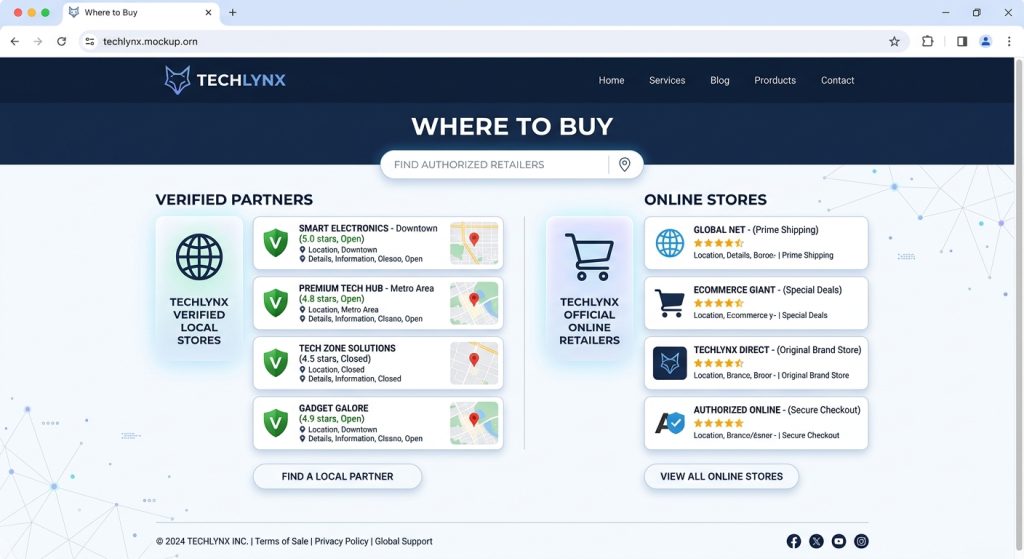
Step 2: Check the “Where to Buy” Directory on the Brand’s Official Website
This provides definitive verification. Major brands maintain a dedicated “Where to Buy,” “Store Locator,” or “Authorized Retailers” directory on their global or regional websites.
If you suspect an online storefront may not be genuine, visit the brand’s main website and search their verified partner list. If the shop or operating company is listed, you can proceed with confidence.
Step 3: Evaluate Warranty Policies and Tax Invoice Availability
Warranty terms and tax compliance offer clear indicators of product legitimacy:
- Commercial Tax Invoices (VAT): Official Stores and Authorized Resellers consistently issue valid electronic tax invoices matched to product serial numbers or IMEIs. This documentation is required to activate digital warranties or submit devices for official servicing.
- Warranty Type: If the product description states “12-24 Month Manufacturer Warranty,” it is sold by an Official Store or Authorized Reseller. If it lists “Store Warranty,” “Seller Warranty,” or “No Warranty,” it is sold by a Marketplace Seller.
Step 4: Analyze Pricing Strategies and Product Origin
List prices provide clear indicators regarding distribution channels:
- Stable Pricing: Official Stores and Authorized Resellers sell products at standard manufacturer suggested retail prices (MSRP). Promotional discounts follow official brand campaigns and rarely deviate drastically from standard market rates.
- Unusually Steep Discounts: If a newly released, high-demand technology product is listed at 30% to 50% below market value, it is likely offered by a Marketplace Seller. Such items may represent untaxed grey-market stock, repackaged open-box goods, or counterfeit items.
Step 5: Identify Seller Badges and Storefront Interfaces
E-commerce platforms establish clear visual badge systems to categorize storefronts:
- Platform Verification Badges: Shopee Mall, LazMall, TiKiNGON, or Amazon Verified Brand Store. Merchants carrying these badges must submit business licenses, distribution authorization letters, and trademark documentation to the platform.
- Storefront Design: Official Stores and Authorized Resellers invest in professional branding, custom banners adhering to brand identity guidelines, structured product categories, and standardized product descriptions. Independent sellers often rely on cropped images, sparse descriptions, and typographical errors.
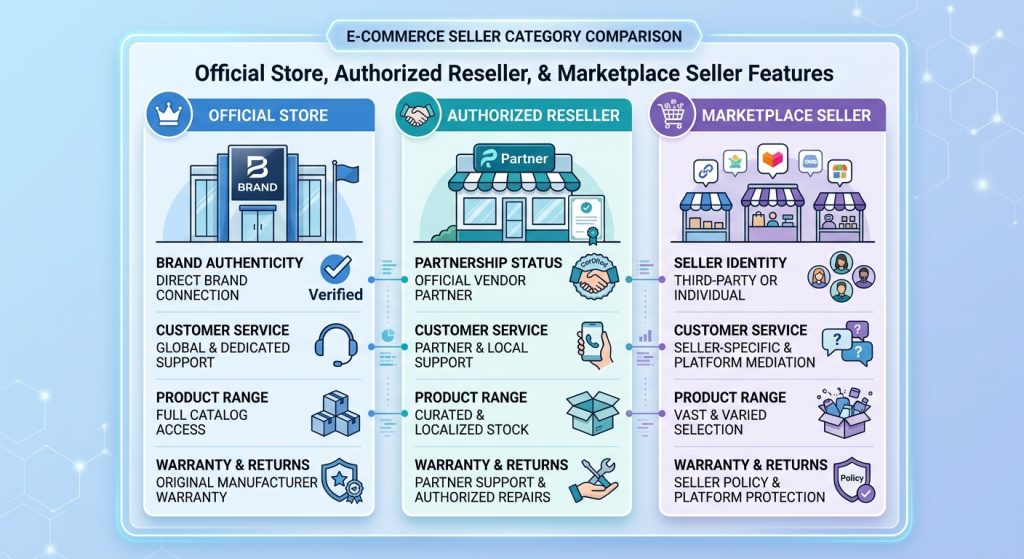
Choosing the Right Seller Model
Selecting the appropriate seller model significantly lowers online shopping risks. Buyers prioritizing safety and full manufacturer warranty coverage should choose an Official Store. Those seeking promotional offers while retaining complete warranty rights will find Authorized Resellers an ideal choice. When considering Marketplace Sellers, buyers should thoroughly inspect product origin, tax invoice availability, warranty terms, and seller reputation before purchasing especially if the item is listed at an abnormally low price.
Common Risks When Buying From Unauthorized Marketplace Sellers
Purchasing from unauthorized Marketplace Sellers may offer upfront savings, but it introduces several risks. Buyers face potential warranty denial at official service centers if the product is a grey-market import lacking valid commercial invoices, leaving the customer responsible for all repair costs. Furthermore, some unauthorized sellers substitute original accessories with low-cost alternatives or complicate the return process when items develop faults, depriving consumers of the protection guaranteed by Official Stores or Authorized Resellers.
Frequently Asked Questions (FAQ)
1. Do purchases from Authorized Resellers receive the same warranty benefits as Official Stores?
Yes. Products purchased from an Authorized Reseller carry 100% official manufacturer warranty coverage identical to items bought from an Official Store. You can bring the product to any authorized brand service center nationwide for support.
2. Why do Marketplace Sellers list the same product much cheaper than Official Stores?
Marketplace Sellers can offer lower prices because their products may bypass official import taxes (grey-market items), represent refurbished stock, consist of repackaged open-box goods, or exclude manufacturer warranty coverage.
3. How can I confirm if an online store is an officially Authorized Reseller?
You can verify the merchant name in the “Where to Buy” or “Authorized Retailers” directory on the brand’s official website. Additionally, check whether the storefront displays official platform badges (such as Shopee Mall or LazMall) and provides full commercial tax invoices.
4. What should I do if I accidentally purchase a counterfeit item from a Marketplace Seller on an e-commerce platform?
Keep the product in its original condition, record photo/video evidence during unpacking, save all message exchanges, and immediately submit a “Return/Refund” request on the platform app citing counterfeit goods. Most platforms maintain policies providing full refunds if you demonstrate the item is fraudulent.