
Cross-border shopping gives buyers access to products that may not be available locally, but disputes become difficult when the delivered item differs from the listing. The color may be wrong, the dimensions may not match, the material may be lower quality than described, or the seller may have shipped another model entirely.
A successful claim does not depend on producing a professionally filmed “technical-grade” dossier. Platforms and payment providers review the evidence relevant to the specific dispute, including the listing, order records, messages, photographs, return tracking, and any additional documents they request.
PayPal may treat an item as significantly not as described when it is materially different from the listing, is a completely different product, lacks undisclosed major features, or was advertised as authentic but is counterfeit. A product that was accurately described but simply failed to meet the buyer’s expectations may not qualify.
What Image and Video Evidence Do You Need When Received Items Differ Significantly From Listing Photos?
No single type of evidence makes a claim indisputable. The goal is to show what was advertised, what was ordered, what arrived, and how the difference affects the product.
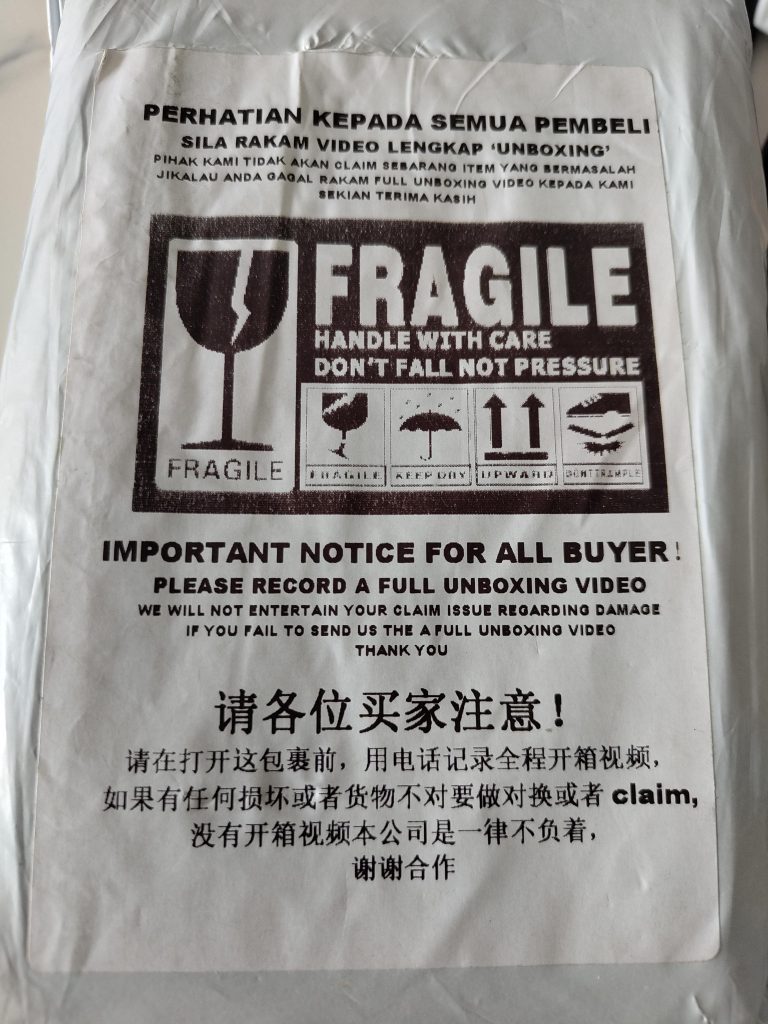
Seamless Unboxing Video: A continuous video beginning with the unopened parcel can be useful, particularly when the package contains the wrong item, missing pieces, or visible shipping damage. However, PayPal, eBay, card issuers, and other platforms do not universally require every buyer to have an unboxing video.
Side-by-Side Comparison Photos: Save the original listing and photograph the received item from comparable angles. Add short labels identifying the exact differences, such as “listing shows metal housing” and “received item uses painted plastic.”
Serial Numbers, Product Labels, and SKU Tags: Photograph the shipping label, outer packaging, manufacturer label, model number, barcode, serial number, garment tag, and any identifying marks. These details can connect the delivered item with the order and help distinguish similar models.
Physical Measurement Proof (Dimensions & Weight): When the dispute concerns size, capacity, or weight, photograph the item beside a ruler, tape measure, caliper, or scale. Show the complete measuring tool and the point from which the measurement starts.
Also retain the order confirmation, selected variation, product specifications, seller name, payment receipt, tracking information, and delivery date. Platforms may evaluate whether both parties complied with their return obligations rather than relying entirely on media files. eBay, for example, considers return requirements, possible listing-policy breaches, and proof of return delivery when deciding an item-not-as-described case.
Technical Guide to Capturing Indisputable Photos and Videos
Evidence should be clear and understandable, but it does not need cinematic production quality.
Record in Bright, Even Lighting: Use enough light to show the product’s surface, color, labels, and defects accurately. Avoid filters or color correction that could make the item appear different from its real condition.
A continuous recording is useful when documenting the initial opening. If additional close-ups are needed, record them separately rather than making the main video difficult to follow.
Capture a Clear Close-Up of the Shipping Label: Show the tracking number and package identifier. Protect personal information when sharing evidence publicly, but provide the unedited details through the platform’s secure dispute system when required.
There is no rule requiring the label to appear within the first five seconds. What matters is that the parcel can be connected to the disputed order.
Replicate the Seller’s Photo Angle: Use a similar angle when it makes the difference easier to see. For color disputes, photograph the product in neutral lighting and include several views. Listing photographs may use studio lighting, so minor visual differences alone may not establish misrepresentation.
Use Standard Physical Reference Objects: A measuring tool is stronger evidence than an object whose size may vary. A credit card has standardized dimensions, but a ruler or caliper is usually clearer because the measurement can be read directly.
Save original files without editing them. Cropped copies can be created for submission, but the original timestamps and full-resolution images should remain available in case additional evidence is requested.
Step-by-Step Guide to Filing a Dispute and Claiming a Refund
Use the dispute process attached to the original transaction. Do not open several claims for the same payment simultaneously without checking the applicable rules.
[Step 1: Direct Seller Negotiation] ──► [Step 2: Platform / PayPal Dispute] ──► [Step 3: Bank Chargeback]
(Request a documented solution) (Formal platform review) (Card issuer review)
Negotiate Directly and Submit Evidence to the Seller
Contact the seller through the marketplace or payment platform. State the order number, received model, advertised model, and requested solution.
A useful message is:
“The item received is Model X, while the order and listing specify Model Y. The attached photographs show the different model labels and dimensions. I am requesting a return for a full refund.”
A partial refund may be appropriate when the buyer wants to keep an item with a minor problem. Do not accept one merely because the seller says a full refund is impossible.
Keep the main conversation inside the official system. Messages from email or external apps may still be relevant, but an on-platform record is easier for the marketplace to connect with the transaction.
Do not return the parcel to an address supplied only through private chat. Wait for the platform’s official return instructions and use the required shipping method.
Open a Dispute on the E-Commerce Platform or Payment Gateway (PayPal)
Escalate when the seller refuses a reasonable solution, stops responding, or approaches the platform deadline without resolving the issue.
Upload only relevant evidence:
- The listing as it appeared when purchased
- Order and variation details
- Clear photographs of the received item
- Labels, model codes, and measurements
- Seller messages
- Any requested expert or authenticity evidence
PayPal’s current US Purchase Protection terms require a significantly-not-as-described dispute to be opened within 30 days of delivery or within 180 days of payment, whichever occurs first. Other PayPal markets and platforms may apply different terms.
eBay currently allows most item-not-as-described return requests up to 30 calendar days after the estimated or actual delivery date, or within the seller’s longer stated return window. Category-specific exceptions may apply.
Follow every deadline displayed inside the case. A platform may require a return even when the photographs clearly show a discrepancy.
Request a Bank Chargeback Through Your Card Issuer
A chargeback is not an automatic final safeguard or guaranteed refund. It is a formal dispute reviewed by the card issuer under applicable law, card-network rules, and the issuer’s procedures.
Contact the issuer and describe the transaction as merchandise that was materially not as described or defective. The bank not the customer selects the applicable dispute category or reason code.
Provide the listing, receipt, photographs, seller communications, platform decision, and proof that you attempted to resolve the issue. Visa recognizes disputes involving merchandise that does not match the description, was shipped incorrectly, or arrived damaged or defective.
Deadlines vary by jurisdiction, issuer, network, and dispute type. In the United States, certain statutory credit-card billing disputes must reach the issuer within 60 days after the first statement containing the error was sent. Card-network procedures may have different operational limits, so contact the issuer promptly rather than relying on a general 120- or 180-day assumption.
PayPal also states that customers cannot pursue the same dispute through PayPal and a card issuer simultaneously or obtain double recovery. A card dispute may remain available after an unsuccessful PayPal decision, subject to the issuer’s rules.
Common Mistakes That Lead to Rejected Cross-Border Disputes and How to Avoid Them
Blurry, Low-Quality Photos or Missing Package Shipping Labels
The Mistake: Submitting dark, cropped photographs that do not show the model number, defect, measurement, or connection with the order.
The Solution: Photograph the parcel, identifying labels, full item, disputed feature, and comparison evidence. The product does not always need to appear beside the outer box in every photograph, but the complete evidence set should establish that the item came from the relevant shipment.
Missing Dispute Deadlines Set by Platforms or Banks
The Mistake: Assuming that every platform provides 7–15 days or that every card claim remains open for 120–180 days.
The Solution: Read the order-specific protection page immediately after discovering the problem. Open the claim as soon as you have enough evidence, then record deadlines for seller responses, escalation, return shipment, and appeal.
Filing within 24–48 hours is often sensible, but it is not a universal legal requirement.
Altering, Repairing, or Tampering With the Item Before Documenting
The Mistake: Washing, repairing, disassembling, modifying, or heavily using the product before documenting its original condition.
The Solution: Inspect only as much as necessary to identify the problem. Preserve accessories, packaging, labels, protective film, manuals, and bonus items.
eBay requires returned items to remain in the condition received and to include the original package contents. A refund may be reduced when the buyer returns an item altered, damaged, or missing parts beyond what was necessary to inspect it.
Proactive Risk-Prevention Tips for Cross-Border Shopping
Archive Product Pages (Web Archive / Screenshots): Save the title, seller name, selected variation, photographs, specifications, return conditions, estimated delivery, and warranty statements when placing the order. A local PDF or full-page screenshot is more dependable than expecting a public web archive to capture a personalized marketplace listing.
Before ordering, determine who is actually selling and supporting the product. How to Distinguish a Brand’s Official Store, an Authorized Reseller, and a Marketplace Seller explains why seller identity affects warranty coverage, return handling, authenticity checks, and the evidence available when a dispute occurs.
Analyze Customer Photo Reviews: Reviews can reveal recurring differences in color, material, packaging, or sizing, but they are not definitive proof that your item will be identical. Check reviews for the same variation and recent production batch where possible.
Prioritize Buyer-Protected Payment Methods (PayPal / Credit Card): Use a payment method with a documented dispute process. Bank transfers, remittance services, and cryptocurrency transfers generally do not offer the same card-style chargeback procedure, and recovery can be difficult once the recipient receives the funds.
When an overseas product differs from its listing, document the discrepancy calmly and match every claim to a photograph, specification, label, or message. Clear evidence improves the review process, but no photograph or unboxing video can guarantee a refund.
Keep evidence until the return, refund, appeal period, and payment dispute have fully closed—not merely for seven days. For expensive, fragile, personalized, or authenticity-sensitive purchases, recording the unopened parcel is a sensible precaution.